


San Francisco Property Division Lawyers
Certified Family Law Specialists With Court-Level Insight Into San Francisco Property Disputes
One of the most complex and often contentious issues in any California divorce is marital property division. California is a community property state: all assets acquired during the marriage are equally owned by both spouses, regardless of whose name is on the title. Those assets, along with any debts accrued by either party, form the marital estate. When dissolving a marriage or domestic partnership, that estate is subject to equal division, though certain factors can affect how that plays out in practice.
You and your spouse may negotiate your own property settlement agreement and submit it to the court for approval, but consulting a San Francisco property division attorney before signing anything helps you understand every implication of that agreement. If you and your spouse are in dispute over how to divide assets, mediation keeps the outcome in your hands; litigation puts it before a judge. At Van Voorhis & Sosna LLP, we assist clients with all aspects of property division, from negotiated settlements to courtroom advocacy.
Get legal advice from San Francisco property division lawyers with court-level insight. Call us at (415) 539-0422 or contact us online for a complimentary phone consultation.
Understanding California’s Community Property Laws
The first step in any property division matter is distinguishing between community property and separate property. Separate property includes assets acquired before marriage, as well as gifts and inheritances received by one party during the marriage. Everything else acquired during the marriage generally belongs to the community estate and is subject to equal division.
Assets commonly subject to San Francisco property division include:
- Your home and other real estate, both inside and outside California
- Bank accounts
- Stock and bond portfolios
- Retirement accounts, 401(k)s, and pensions
- Vehicles and boats
- Art and collectibles
- Family-owned businesses or business interests
Division becomes significantly more complex in high-net-worth cases, when retirement or pension plans carry unusual terms, when assets are being undervalued or concealed, when business or professional practices are involved, or when separate property has become commingled into the marital estate. Commingling occurs when separate funds are mixed into jointly held accounts or used to purchase community assets, making it difficult to trace their origin.
Property division is also shaped by valid premarital and prenuptial agreements that predetermine financial rights and responsibilities, and it can be affected by spousal support awards, one spouse squandering assets in bad faith before the divorce, and tax consequences that change the effective value of what each party receives.
How California Courts Divide Community Property
California law requires equal division of community property: each spouse receives one-half of all community assets and debts. This isn’t a standard where a judge weighs factors like length of marriage, earning capacity, or health to adjust the outcome. The equal division presumption applies regardless of those considerations.
Several legal mechanisms can still affect what each party ultimately receives. Under California Family Code §2640, a spouse who used separate property funds to contribute to a community asset through a down payment or loan principal reduction has a reimbursement right. That spouse recovers the separate property contribution from the asset’s net value before the remainder is split equally. Both parties also carry a fiduciary duty to each other throughout the proceedings: neither may sell, transfer, encumber, or conceal community property until division is finalized. When one spouse violates that duty, the court can sanction the concealment and account for the misappropriated assets in the final award.
Our partner Sarah Van Voorhis serves on the San Francisco Superior Court’s Settlement Master panel as a family law settlement master. That appointment gives clients direct insight into how local judges evaluate property division disputes before a case ever reaches trial. We advise clients on realistic likely outcomes grounded in how California courts actually apply community property rules, not how parties hope they might.
Identifying & Valuing Marital Assets
Accurate valuation is the foundation of any fair property division. Each asset must be assessed at its current value, and for certain asset types, that process requires professional analysis.
Asset types that commonly require expert analysis include:
- Real estate: A licensed appraiser determines fair market value at the time of division, accounting for any appreciation that occurred during the marriage.
- Business interests: Financial experts, accountants, and business valuators assess the business’s worth and separate any community growth from the owner’s separate property interest when the business predates the marriage.
- Retirement accounts: Pensions and 401(k)s require a Qualified Domestic Relations Order (QDRO) or Domestic Relations Order (DRO) to divide properly. IRAs are divided through a transfer incident to divorce under IRS rules rather than a QDRO. In all cases, only the portion earned or contributed during the marriage is community property.
- Investment portfolios: Stocks and bonds must be carefully evaluated to ensure their value, including any appreciation traceable to community contributions, is accurately reflected in the division.
We work with financial experts, forensic accountants, and appraisers so all property is identified, properly valued, and presented in a form the court can act on. In cases involving hidden or undervalued assets, forensic accounting and asset tracing may be necessary to produce a complete picture of the marital estate.
RSUs, Domestic Partnerships, & Other Property Issues Common in San Francisco
San Francisco’s asset landscape presents property division questions that many firms rarely encounter. The sections below address three areas where that complexity is most pronounced.
RSUs & Stock Options
Tech and startup employees frequently hold restricted stock units (RSUs) and stock options granted partly before and partly during a marriage. Whether those awards are community or separate property depends on the grant date, the vesting schedule, and the purpose of the award. Dividing them accurately requires careful analysis and often expert input.
Domestic Partnership Dissolutions
Domestic partnership dissolutions follow the same community property framework as marriages in California. Assets and debts accumulated during the partnership are subject to equal division, and the same rules around commingling, transmutation, and separate property apply. We handle these matters with the same depth of analysis we bring to any dissolution.
LGBTQ+ Dissolutions & Non-Traditional Families
We represent both traditional and non-traditional families in property division, and we bring particular sensitivity to LGBTQ+ dissolutions and domestic partnership agreements. Businesses started before a marriage or domestic partnership may still carry a community property interest in appreciation that occurred during the relationship, requiring apportionment under applicable California case law. We identify those interests and work to have them properly accounted for in the final division.
Why San Francisco Families Choose Van Voorhis & Sosna LLP
Our practice is limited exclusively to family law in the San Francisco Bay Area. That focus has produced more than 100 years of combined family law experience across our team, and every credential we hold bears directly on the work we do for clients facing property division.
Credentials & Recognition
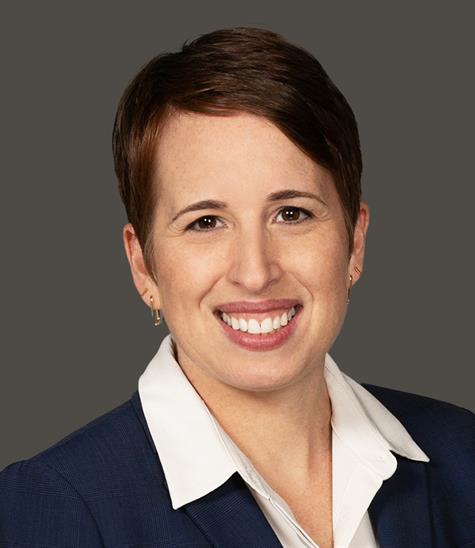
Our partners are Certified Family Law Specialists, recognized by the State Bar of California Board of Legal Specialization. That designation requires demonstrated competency, peer references, and ongoing education in California family law. Sarah Van Voorhis has been named to the Super Lawyers list every year from 2011 through 2026, Top 100 Attorneys in Northern California from 2015 to 2018 and from 2020 to 2026. She was appointed to the Family Law Advisory Commission by the State Bar of California in 2014. Founding partners Sarah Van Voorhis and Ariel Sosna were named to the Super Lawyers Top 50 Women list in 2024-2026 and Van Voorhis & Sosna LLP was named SFGATE’s Best Family Law and Divorce Attorney in the Bay Area for 2025 and is a Top 5 Finalist for Best of Bay Area 2026.
Our Approach to Property Division
Our experience has shown that vigorously preparing a case for trial through strategic litigation and thorough discovery often leads to a stronger, faster settlement than a passive negotiation approach. We bring in financial experts, appraisers, and other professionals so no asset goes unidentified, undervalued, or unchallenged. When the facts call for it, we’re fully prepared to take a case to court.
Put an experienced San Francisco property division attorney on your case to pursue a fair and just settlement. Contact us online or at (415) 539-0422 for a free phone consultation.
Meet Our Team
Honest & Upfront Representation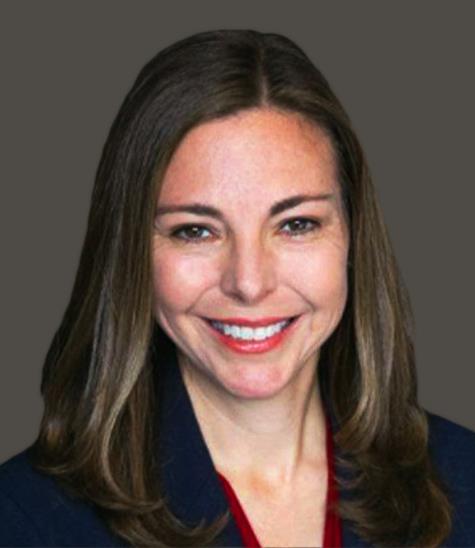



What Sets Us Apart?

-
Over 100 Years of Combined Experience
-
Highly Educated & Recognized for Excellence
-
We Have Certified Family Law Specialists
-
We Add Value for Our Clients